
Will Science Ever Prove Magic?
Rethinking the Question

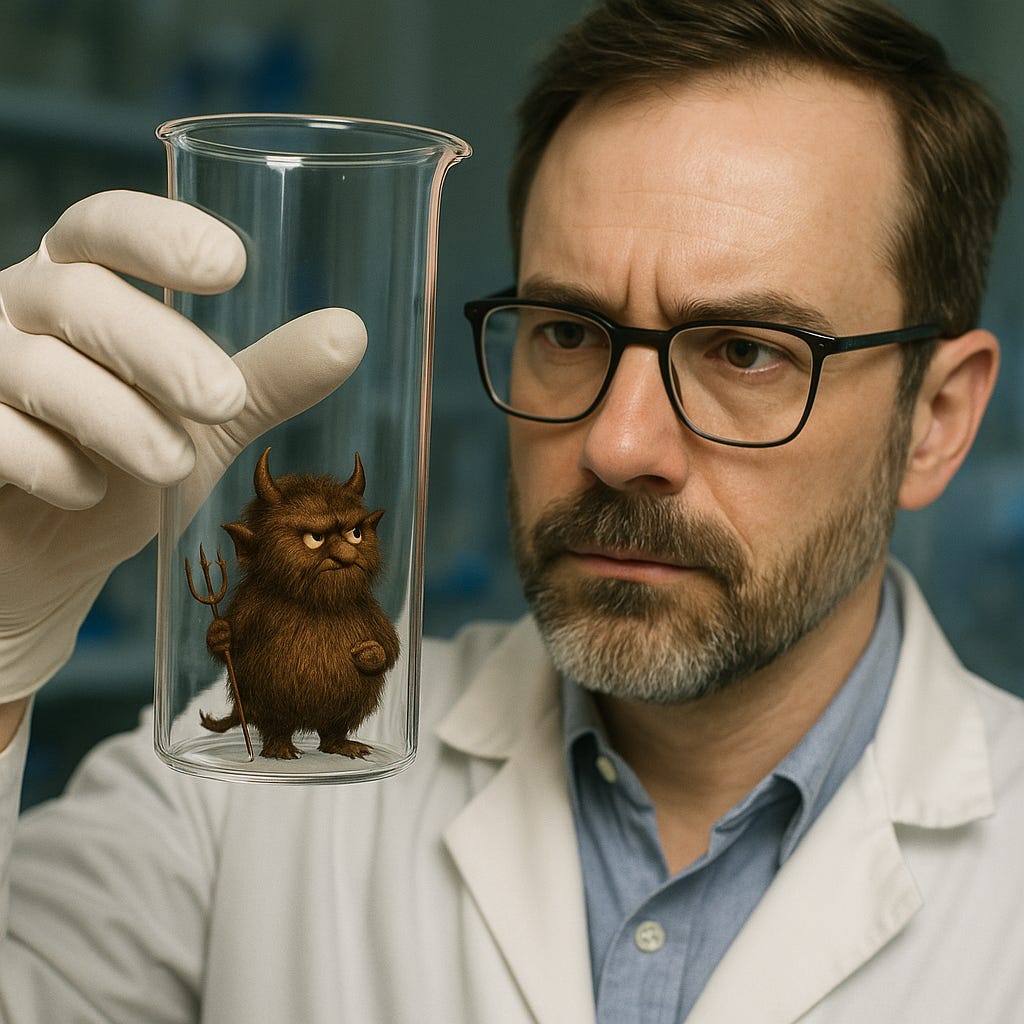
Dr. Angela Puca recently published a thought-provoking video essay on her channel, Angela’s Symposium, exploring whether the scientific method can prove magic. As a scholar of esotericism and a lecturer in religious studies, she approaches the subject with the balance of someone trained to bridge the academic and the spiritual. Her central claim is that science cannot prove magic, and it probably should not try.
Assuming the existence of magic, Puca suggests that the mechanisms by which magic operates are not compatible with the scientific method. The former is subjective, contextual, personal, acausal (i.e. synchronicities); the latter is objective, reductionist, and built on repeatability. Magic, she suggests, loses its essence if forced into the laboratory.
Her argument is layered, and for many practitioners, it serves as a necessary corrective to the naïve desire for “proof” in a society obsessed with scientific validation. However, I believe her conclusion is premature. While correct in principle, adopting a historical perspective on science reveals its inherent limitations, incompleteness, and ongoing evolution. The real issue is not that magic cannot be substantiated, but that science has not yet evolved far enough to comprehend the phenomena to which magic alludes.
