
The odious Papus
Occultism and reactionary politics

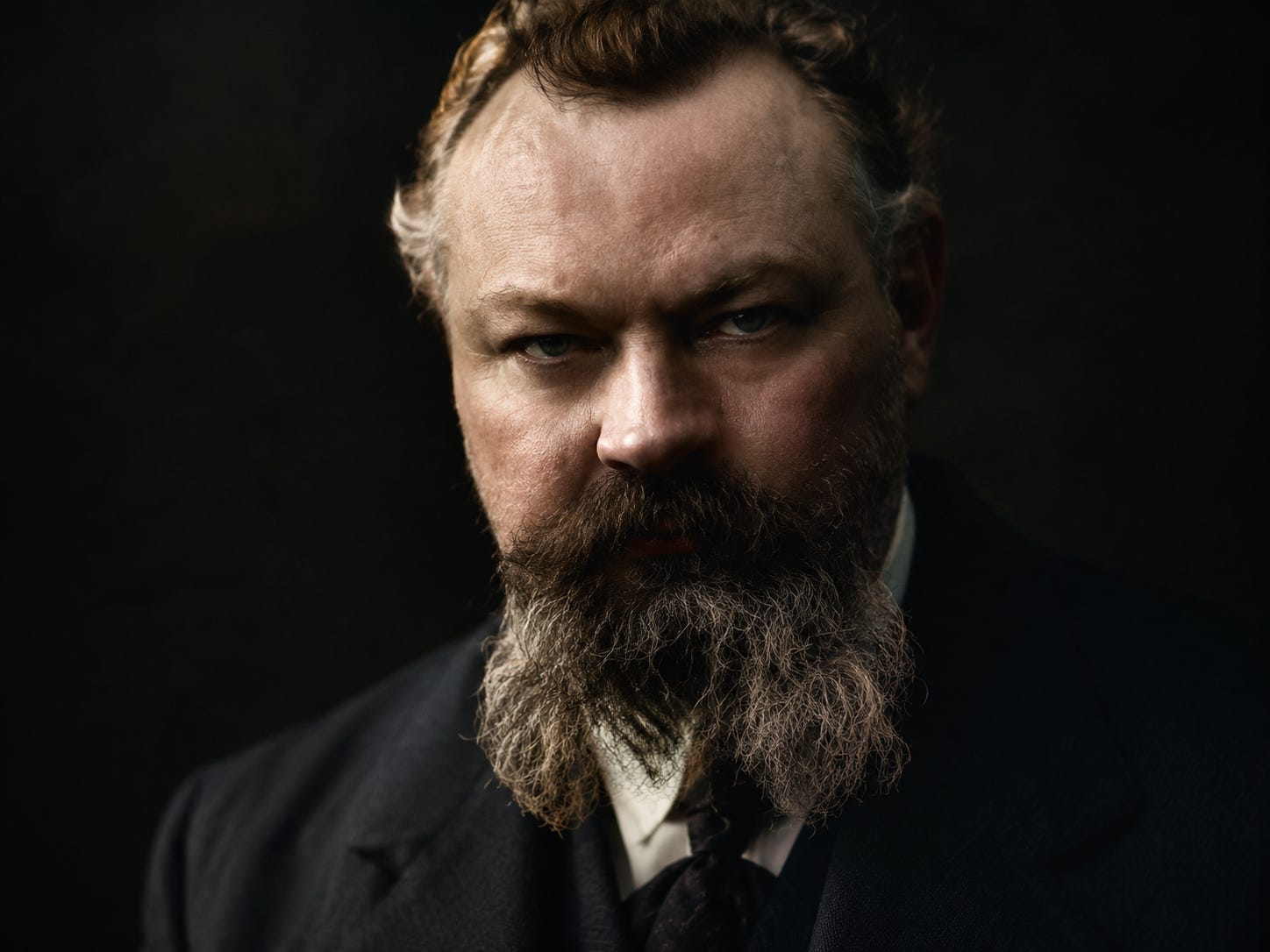
Gérard Encausse, better known as Papus, is one of those occult figures whose influence is everywhere, even when the name itself has slipped out of view. Modern Martinists, tarot writers, ceremonial magicians, esoteric Christians, and many people who talk grandly about “Western Tradition” have inherited something from his system-building, order-making, diagrams, French occult vocabulary, and treatment of initiation as a structured science. Many have no idea that behind the useful occult machinery stood a man tangled in synarchist authoritarianism, antisemitic conspiracy culture, anti-Masonic paranoia, and the political sewage of the French reactionary right.
Papus helped shape modern occultism, but he also imported a vision of hidden rulers, sacred hierarchy, and spiritual governance that deserves much closer scrutiny.
Encausse is usually remembered as one of the great organisers of the French occult revival. He was a doctor, occult writer, hypnotist, Martinist, Rosicrucian organiser, editor of L’Initiation, promoter of French esoteric “method,” and one of those tireless Belle Époque figures who seems to have joined, revived, founded, edited, reorganised, or invaded every esoteric body within reach.
The man had the organisational habits of a spider with a filing cabinet. He was born in 1865, moved to Paris as a child, studied medicine, immersed himself in Kabbalah, tarot, magic, alchemy, and Éliphas Lévi, then became one of the central personalities of late nineteenth-century French occultism. In 1888 he helped create occult publishing structures and launched *L’Initiation*, while in 1891 he founded or reconstituted the modern Martinist Order, which remains his most durable institutional legacy.
The difficulty with Papus is that his respectable esoteric portrait is only half the man. The other half belongs to a political and cultural world soaked in anti-liberalism, anti-parliamentarianism, fear of revolution, Catholic reaction, anti-Masonic paranoia, antisemitism, and dreams of a secret spiritual elite restoring order to a decaying modern world. This does not mean that Papus was a fascist, since fascism in its later twentieth-century form did not yet exist. Nor does it mean he can be lazily stuffed into a Nazi-occult conspiracy folder.
Even so, he was closely aligned with currents that later nourished Europe’s extreme right: synarchy, conspiratorial anti-Masonry, authoritarian spiritual politics, antisemitic suspicion of finance, and the belief that government should be steered by hidden initiates.
Papus’s political imagination was shaped above all by Alexandre Saint-Yves d’Alveydre, whom James Webb calls his “intellectual master.” Saint-Yves developed the doctrine of synarchy, a supposedly organic system of social government in which society was arranged according to functional hierarchies. Webb summarises the theory as a division of social life into three main systems, analogous to the human body: economic life, law and justice, and a directing spiritual or intellectual force. Papus took this seriously and promoted synarchy as a political remedy.
Synarchy can present itself as polite and rational while undermining democracy behind closed doors.
However, if you look under the bonnet of that idea, it fast becomes toxic. It makes society into a body, with people as organs. The rulers become the brain and any dissent against them becomes sickness. Politics becomes medicine administered by those who claim to understand the hidden laws. Human freedom, naturally, is invited to wait outside with the other vulgar inconveniences.
This places Papus in a recognisable late nineteenth-century pattern. He rejected the “lower” or materialist forms of socialism, while preserving a grand esoteric version of social reform in which occult science would guide society from above. Julian Strube’s study of French occultism shows that Papus and other occultists were entangled with socialist language and post-1848 social thought, but they increasingly recast occultism as superior to ordinary politics
Papus even treated social studies as something that should benefit from occult science, not the reverse. The assumption is revealing: the initiate knows the real laws of society, while the political riff-raff quarrel in the mud.
Papus’s connections with the extreme right become clearer when we place him in the atmosphere of the Dreyfus Affair and the anti-Masonic Catholic right. France in the 1890s was not merely arguing about one wrongly convicted Jewish officer. It was splitting open along religious, political, military, and racial lines.
For those not in the know, Alfred Dreyfus was a Jewish officer in the French army who was wrongly convicted of treason in 1894. The United States Holocaust Memorial Museum notes that the case divided France between anti-Dreyfusards, including much of the Catholic, military, and right-wing world, and Dreyfusards from moderate Republican, Radical, and Socialist circles. The Affair exposed antisemitism as a powerful force in French public life.
Papus did not stand outside this poisonous climate like some detached sage polishing his astral spectacles. Webb states plainly that Papus was an antisemite and that he moved in circles where occultism and antisemitic conspiracy thinking overlapped. One of the nastiest forgeries was The Protocols of the Elders of Zion, which has served as a backbone for anti-Jewish conspiracy theories ever since it was written. Around the time of its first appearance, Papus was friendly with Gaston Méry, whom Webb calls an “illuminated anti-Semite.” Papus also worked with Jean Carrère, a journalist attached to Drumont and La Libre Parole, the notorious antisemitic milieu surrounding Édouard Drumont.
Papus, using the pseudonym “Niet” with Carrère, produced La Russie d’aujourd’hui in 1902. The work arose from the Russian context and reflected Papus’s concern over Russian politics, revolution, finance, and hidden influence. The Bibliothèque nationale de France lists La Russie d’aujourd’hui / Niet among works associated with Encausse, and a Martinist bibliography also attributes Niet [et J. Carrère], La Russie aujourd’hui to Papus and Carrère.
The antisemitic dimension of this Russian material is especially ugly. Webb connects Papus and Carrère’s worldview to the idea of hidden financial syndicates manipulating events such as the Boer War. Carrère had returned from South Africa steeped in unlikely antisemitic interpretations, and Papus’s collaboration with him came immediately after that. Their shared suspicion of secret financial powers fits the broader antisemitic conspiracy style of the age, where Jews, finance, revolution, Freemasonry, and modernity were bundled together into one convenient monster. Humans, being apparently unable to tolerate complex causes, invented a villainous octopus and called it analysis.
Papus’s anti-Masonry is complicated because he was involved in various esoteric and para-Masonic structures. He was connected with Memphis-Misraim and other initiatory networks, and he presented Martinism as distinct from ordinary Freemasonry. Yet this distinction was politically useful.
Webb notes that Papus represented Martinism as opposed to Freemasonry, while later Russian antisemitic and anti-Masonic circles attacked Papus and Philippe as dangerous sorcerers. This is one of the more absurd features of the period: occultists denounced some secret societies while founding others, anti-Masons believed in satanic hidden lodges, and everyone involved seemed convinced that history was controlled by whichever invisible committee they disliked most.
As I pointed out in King over the Water one of Papus’s eager recruits was Samuel Mathers. Papus even joined Mathers’s Alpha et Omega order. Mathers’s politics were thought to be Jacobite and mildly eccentric. However, that never fully explained the clash between him and Annie Horniman, who was the daughter of a Liberal politician. If Mathers absorbed more of Papus’s synarchist outlook than is usually recognised, his fierce hostility toward Horniman makes more political sense.
A review in La Vie des idées describes how Catholic anti-Masonry developed from the late eighteenth century, especially through counter-revolutionary conspiracy literature. By the nineteenth century, writers such as Gougenot des Mousseaux fused anti-Jewish and anti-Masonic themes, making Jews the supposed source of attacks on Christian society. This “anti-Judeo-Masonic” literature became especially useful to reactionary and monarchist circles after the failure of restoration hopes, since conspiracy theory supplied a wonderfully lazy explanation for political defeat.
Occultism intensified this fantasy. La Vie des idées notes that occultism and esotericism helped bind together the themes of Judaism and Freemasonry because both could be imagined as systems of secret knowledge inherited from Kabbalah and Talmudic tradition. In other words, the very materials Papus studied, translated, reorganised, and popularised were also used by reactionary Catholics and antisemites to create the myth of a hidden Jewish-Masonic control system. Papus’s position was slippery: he drew on Kabbalah and initiation while also participating in antisemitic and anti-Masonic political imagination. The irony is almost impressive, if one has a high tolerance for sewage.?? Webb comments on the irony of Papus’s hatred of Jewish influence being set aside when he worked with Mina Mathers, who came from a Jewish family.
Papus went to Russia, which deepened his connection with authoritarian politics. He served as a physician and occult consultant around the imperial court. Sources differ on the details, and some later stories about Papus conjuring the spirit of Alexander III for Nicholas II are unreliable or embellished. But the connection with the Russian imperial world is real enough. Webb says Papus did exercise influence in Russia, and other summaries note visits in 1901, 1905, and 1906 connected with Nicholas II and Alexandra.
That point is significant because the Russian court was a magnet for reactionary mysticism. Papus’s associate and spiritual hero, Maître Philippe de Lyon, had access to imperial circles before Rasputin became the more famous holy nuisance. The court was not “occult” in some harmless salon sense. It existed under the pressure of revolution, autocracy, Orthodox mysticism, police politics, anti-Jewish paranoia, and fear of liberal reform. Papus’s desire to influence thrones aligns with Webb’s comparison between him and Rudolf Steiner: both sought to direct political life through spiritual ideas, though Papus’s model came through Saint-Yves and synarchy.
Papus’s nasty side was not a collection of stray opinions but a whole structure of thought. He believed in hidden laws governing society and in initiates who possessed privileged access to them. He distrusted ordinary parliamentary politics and revolutionary politics alike, then embraced synarchy, which made hierarchy appear natural and spiritually justified. He also participated in antisemitic conspiracy culture, especially through his connection with Carrère and the Russian material. In his circle, anti-Masonry, anti-modernity, Catholic reaction, monarchist nostalgia, and occult elitism fused, because one bad idea clearly wasn’t enough.
This is why Papus could be attractive to later right-wing esoteric currents, even when he did not belong to their later formations. He supplied a style of thinking built around order, hidden elites, organic society, spiritual authority, and conspiracy. Democracy, public debate, political conflict, and social analysis were treated as lower forms of understanding, or symptoms of modern decay. Later extreme-right movements found plenty to admire in that mixture, since authoritarian soup apparently requires a stock of metaphysics. One later British example was Christina M. Stoddard, head of the London Stella Matutina, who later wrote Lightbearers of Darkness, an anti-Golden Dawn conspiracy classic that sang from a similar hymn sheet. Figures like Stoddard could take synarchy, hidden masters, anti-Masonic paranoia, and antisemitic finance myths and cook them into darker twentieth-century stews.
Saint-Yves’s Agartha myth gave synarchy a mythic geography. In Mission de l’Inde en Europe, Agartha was presented as a hidden spiritual kingdom preserving the true order lost by the surface world. Its rulers were superior initiates, not elected politicians, which made the myth a natural companion to synarchic politics. Later occult-political writers could turn Agartha into a fantasy of secret centres, hidden masters, ancient wisdom, and elite rule. In nationalist circles, including those in Germany, that fed dreams of a buried tradition superior to liberal modernity.
It could also be argued that synarchist ideas reached one of their more dangerous political afterlives in Vichy France during the Second World War.
To be fair, Papus was larger than his worst politics. He was a major occult synthesiser, a doctor, a prolific educator, and a figure who helped preserve and repackage strands of Western esotericism. His Martinism contained more than a proto-fascist production line, although the conveyor belt was clearly installed in one corner. French occultism of the period also included socialist, Christian-social, feminist, mystical, and universalist currents. Some French occultists used esotericism to imagine social harmony or post-materialist reform.
But Papus’s solution to modernity leaned toward hierarchy and hidden control. His synarchy promised heavenly order and delivered earthly hierarchy, hardly democracy, even with candles. His political writing fuses occult correspondence, social physiology, and conspiracy theory into a doctrine of rule by those claiming superior knowledge. The magician stops seeking and becomes an administrative metaphysician, treating society as a pathology and prescribing obedience to invisible law.
Papus did not merely brush against right-wing politics; he helped pull French occultism into an anti-liberal, hierarchical, conspiratorial culture: synarchist authoritarianism, antisemitic conspiracy, anti-Masonic polemic, Russian court reaction, and fantasies of a spiritually steered state.
That makes him historically important and morally compromised. This is what you get when bright occultists decide that knowing symbols (and handling incense without self-immolation) qualifies them to redesign civilisation.
Paid subscribers can download this article or listen to it read aloud below the paywall.
