
The Gods inside us
Jung, the Seven Sermons and the archons of the unconscious

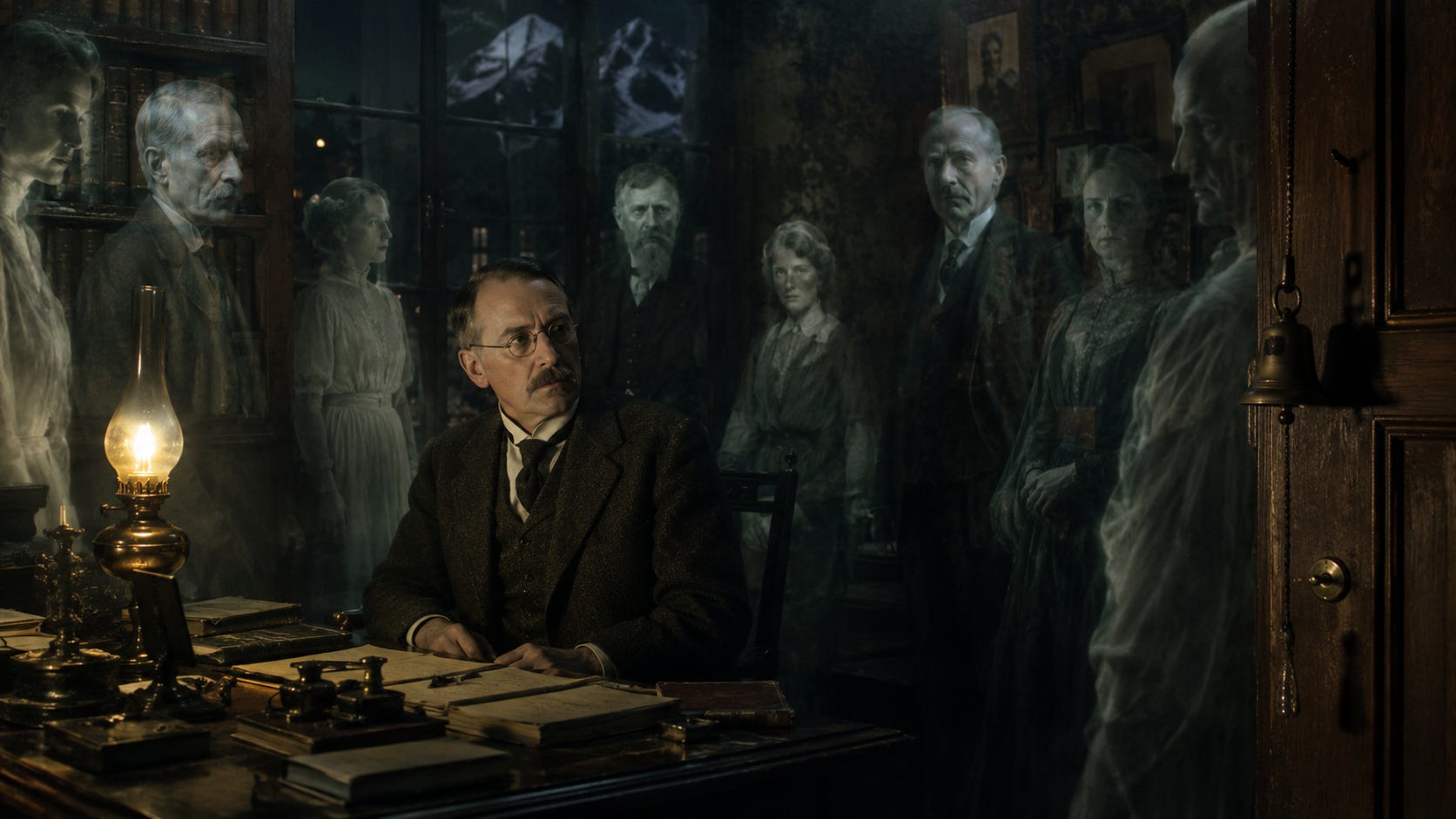
The dead do not always leave when they die. They remain as unfinished questions, moving through the human mind, long after anyone could have answered them. They pass through generations disguised as inherited belief. In 1916, Carl Jung heard them crowding his house.
He described an atmosphere so oppressive that it affected his children. His eldest daughter saw a white figure, another daughter felt her blanket pulled away during the night, and his son suffered an anxiety dream. The front doorbell then appeared to ring by itself, while the house felt crowded with invisible visitors. When Jung asked what they wanted, they announced that they had returned from Jerusalem without finding what they sought. The words then began to flow, and he completed The Seven Sermons to the Dead over three evenings. According to Jung, the disturbance lifted as soon as he began writing. Whether the house contained spirits, psychic projections or a family caught up inside Jung’s prolonged confrontation with the unconscious is unclear. The event left behind a text that still unsettles.