
The Difference Between Key of Solomon Pentacles and Talismans

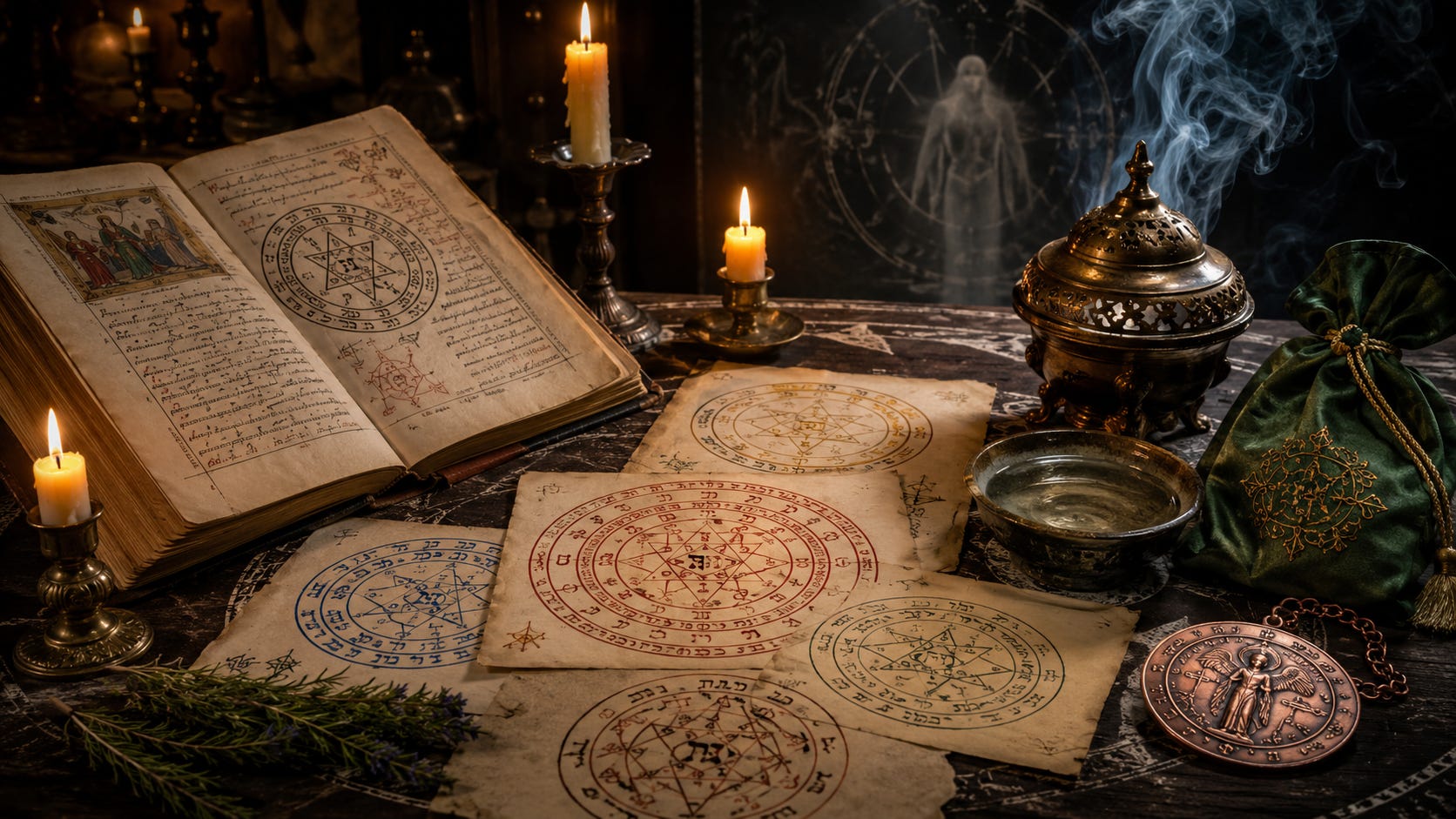
This article grew out of a debate on Aaron Leitch’s Facebook group about whether the pentacles of the Key of Solomon should be treated as talismans. My answer remains firmly against that idea. They may look like talismans, be sold as talismans, and have drifted into folk-magical use as talismans, because apparently, resemblance is now a complete system of magical logic. In the Key itself, pentacles have a different function. They are ritual instruments for conjuring, commanding, protecting, and mediating contact with spirits. A talisman, properly made, is something else: a living magical body created to carry an intention into manifestation. Confusing the two changes the magical technology being used.
The confusion is understandable up to a point. Key of Solomon pentacles have been sold in occult bookshops for decades, often as cast metal discs. I bought a few in New Zealand for $10 each. Today, cut or laser-etched versions can be found on Etsy, with some costing $450. They are usually marketed as talismans to be carried for wealth, protection, and so on. This has been going on for a long time and might have entered hoodoo and European folk-magical practice. In many ways, it makes sense. With their geometric shapes, Hebrew letters, and occasional images, pentacles look like talismans.
However, the Key of Solomon, particularly in its early drafts, tends to play down the use of pentacles as talismans. For example, The Clavicle of Solomon, revealed by Ptolomy the Grecian [Sloane manuscript 3847, edited by Joseph H. Peterson], the earliest dated version, April 8, 1572, makes no mention of pentacles being used as talismans. It says they are consecrated by having three masses said over them to control spirits during a Key of Solomon ritual and provide physical protection during the operation.
