
Occult heroes and shadows
Why dead occult teachers need bodyguards

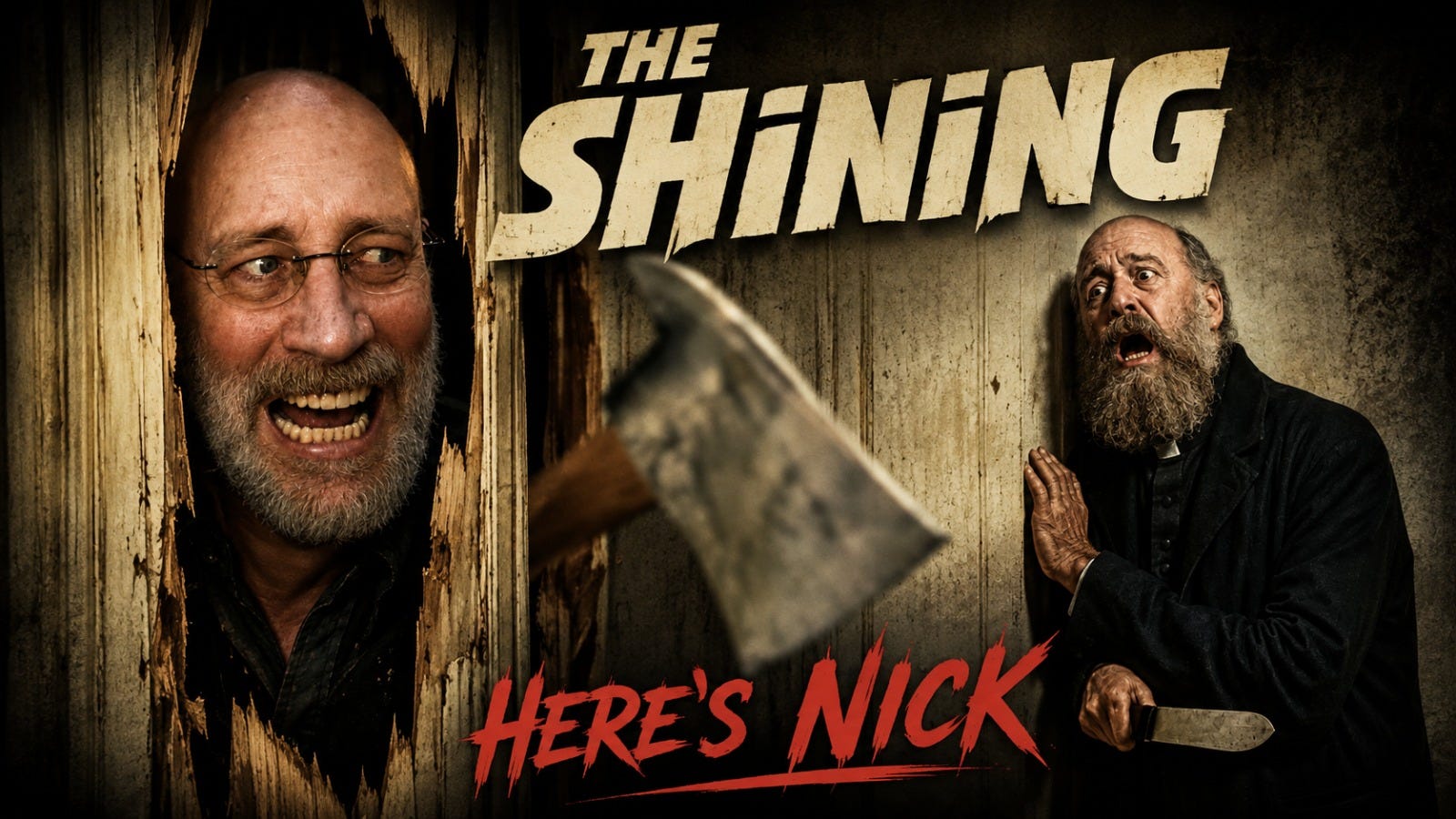
Nick Farrell has been writing what some readers call hatchet jobs on prominent occultists. This is slightly melodramatic, since most of the “victims” died decades before he arrived with his axe.
Some of the articles have been about people, such as Julius Evola, who were nasty pieces of work but managed to escape much of the reckoning they deserved because their reputations were protected by their followers. Others, such as Gérard Encausse (Papus) and Charles Webster Leadbeater, have escaped judgement because people did not know how rotten they were. Leadbeater, in particular, faced serious allegations of sexual misconduct involving adolescent boys and was repeatedly protected or rehabilitated by the organisations around him.
The articles have examined influential occult figures whose intelligence and spiritual insight coexisted with some spectacular personal defects. They missed important lessons which coloured their work or, in some cases, crippled it. Bill Gray, for example, was a gifted practical magician who was also a racist and a talented destroyer of friendships. What strikes me is that these articles often bring out details most readers never knew or were only half-understood. But they are not demolition jobs. Farrell makes room for the qualities that made these personalities influential in the first place. Some of them built far-reaching systems while private dysfunctions, often invisible to most people, seeped into their teaching. The series is ongoing, since there is no shortage of material.
Every time one of these articles appears, someone decides the author is trying to ruin the person’s work. As if admitting awkward truths about these people somehow makes everything they wrote worthless. Uncomfortable facts become threatening because they disturb the emotional arrangement supporting admiration. But if the work collapses the moment its writer becomes human, perhaps it was never solid to begin with. We should not let personal identification cloud our discernment. Useful teaching can still be separated from the personality of those who delivered it.
The recent controversy involving astrologer Steven Forrest showed this mechanism operating around a living teacher. During a podcast discussion about shadow work, Forrest used a racial slur and spoke about prejudices he had held earlier in life. His subsequent apology was criticised for concentrating heavily on his intentions and reputation while giving less attention to how his words affected others. One response came from astrologer Samuel Reynolds, who had known and respected Forrest for years. Reynolds did not deny the reality of the shadow, but questioned what shadow work means when its effects reach beyond the person examining it.
What interests me is not so much the argument itself, but why it struck such a nerve. Some people examined Forrest’s words and apology, while others heard an attack on astrology, their training and the man who had helped them understand their lives.
When you reach that point, the discussion becomes almost impossible, because the boundaries between teacher, student and system disappear, and the criticism of one ends up applying to all three.
Forrest may appreciate the astrological timing more than most. On 12 August, a total solar eclipse falls at about 20 degrees of Leo as the lunar nodes shift towards the Leo-Aquarius axis. Symbolically, the tension is between identity, visibility and personal authority on one side, and the wider group on the other. Under that pressure, reputation can stop cushioning everything, allowing careless words or actions reach people who are less willing to excuse them as the public persona begins to crack.
A character like Bill Gray may not have cared about his flaws or the damage they caused, perhaps because he considered other people beneath his concern. This astrological configuration can symbolise how such contempt does not always remain contained, and how reputation cannot protect someone indefinitely from the consequences.
Many books or teachings come into a reader’s life during a crisis. They provide a new perspective or language for experiences the reader could not previously understand and become part of that person’s intellectual and emotional scaffolding. For these reasons, the teacher becomes woven into the student’s story, and their work helps shape them.
Later criticism can feel like an attempt to take that transformation away. If the teacher was deeply flawed, perhaps the student’s insight was wrong. If the system contains prejudice, detachment from reality or dishonesty, maybe years of study were wasted. Defending the teacher becomes a means of defending one’s past. The logic may be poor, but emotionally it has considerable power.
Psychologists describe cognitive dissonance as the discomfort produced when evidence conflicts with an existing belief or self-image. That discomfort is reduced through dismissal or selective interpretation. When a spiritual teacher has become attached to the student’s identity, evidence of misconduct goes beyond intellectual disagreement and threatens a portion of the self. The easiest escape is often to resent or attack the evidence.
This can include a variety of justifications: the teacher was misunderstood; the quotation lacked context; standards were different then; the critic is jealous, politically motivated, insufficiently initiated or possessed by an annoying fluffy demon called Marmaduke. The excuse changes according to the audience, but the aim is the same. It protects the devotee from having to admit that part of their inner world was built on unstable ground.
A useful psychological term for this situation is the parasocial relationship, a one-sided emotional bond with a public figure. A student may feel they know an author through books, recordings, workshops and stories, even though the author knows nothing about them.
This is why people warn against meeting your heroes. The real person may fail to match the version you have built in your head, and you might discover that your favourite artist, writer or teacher is a tosser.
Occultism intensifies the effect because the teacher often claims access to hidden worlds, giving their revelations an authority that cannot be tested. A student may believe the teacher possesses a superior consciousness or direct contact with beings whose names contain too many vowels. That is why any criticism can then feel like an assault on what is considered sacred.
The shadow is another useful psychological concept because it concerns the parts of the teacher that do not fit the spiritual identity they present to themselves and others. Their disowned flaws can remain hidden while the public personality appears increasingly wise or enlightened. Those rejected qualities continue operating beyond conscious control and are often projected onto other people.
In his reply, Reynolds pointed out that a person’s shadow may belong to their private psychology, but its consequences do not remain private once they reach others. Self-recognition is only the beginning. The fact that a person may understand the origins of a prejudice or trace it through family history does not mean they have taken responsibility for the harm it causes. Reynolds’s point was that Forrest could explain what he meant, but he could not control how other people experienced what he said, particularly those who knew racism as something lived instead of a concept studied at a psychological distance.
Shadow work should not become another form of self-absorption, with the person endlessly talking about the grandeur and complexity of their darkness while everyone else is expected to admire the excavation.
The old Jungian idea about a brighter light casting a darker shadow applies here, but only if it is not made into a spiritual alibi. A larger shadow does not prove a greater light but shows that increased influence and public authority simply give private defects a longer reach.
In these situations, the follower gives the teacher exceptional status, while receiving reflected importance from the association. It feels better to be an apprentice of the master than a lost person trying to make sense of difficult material. So, when the master falls, the follower loses some of that borrowed light.
A gifted spiritual teacher can still be remarkably blind to their own faults. Intelligence does not automatically make someone self-aware; in many cases, it only gives the ego more elaborate lawyers. They can justify behaviour with greater sophistication than an ordinary idiot, using spiritual language and symbolic systems to turn anger into righteous force or prejudice into tradition.
Students also have the habit of gathering around teachers who seem to have definitive answers, especially about invisible realities that cannot be checked. Admitting doubt weakens authority, so the teacher becomes increasingly invested in appearing complete and authoritative.
A Gnostic view is suspicious of any external authority claiming to possess the final truth. Teachers and techniques can be useful; they may point the way or stir something awake, but none of them can replace gnosis. In the end, truth must be recognised through direct contact with the divine within.
A Gnostic may respect a teacher or use a method, but they do not hand themselves over to either. Spiritual development means becoming freer from anything that wants to define reality for us. A tradition may serve as a map, but attachment to it becomes another form of imprisonment.
This must be turned inward. It is easy to question doctrines and teachers while leaving our prejudices untouched. Gnosis requires the same scepticism toward the assumptions and mechanisms inside the personality.
This does not erase the value of the teachings. Instead, it places them in a broader human context, where even contradictions and distortions can be revealing, allowing for a more honest and discerning approach.
The same principle applies across religion, philosophy, science, politics and art. Martin Heidegger produced some of the twentieth century’s most influential philosophy while openly supporting the Nazi regime. Picasso helped reshape modern painting, yet his treatment of women was cruel and exploitative. Spiritual history contains enough similar figures to fill a lodge, where they would likely spend the meeting arguing over who had attained the highest grade.
Brilliance and moral development are separate achievements. A glimpse of something extraordinary, or even the ability to devise a system of spiritual growth, does not automatically make someone emotionally mature or incapable of manipulative or abusive conduct.
Acknowledging this does not require reducing every historical figure to their worst behaviour. Discernment means looking honestly at the scale, persistence and consequences of their actions without reaching automatically for canonisation or the bonfire.
Some teachers were damaged human beings who produced valuable work. A few were utter fuckwits whose reputations survive because their followers preferred saintly biographies. Some followers even went so far as to build a cult of personality around their dead teachers, refusing to tolerate any criticism.
Maturity means being able to hold both things at once. Gray was not less racist because he was a gifted magician. Crowley’s best writing still has to be read beside the ugliness of his behaviour, and Dion Fortune’s insight did not prevent her from sometimes turning suspicion and personal mythology into fact. We do not discard a useful idea because its author had a shadow but knowing that should make us look at it more carefully. We can learn a lot from a spiritual teacher’s failures.
The awkward parts of a teacher’s life can show where the system failed, where the teacher failed to apply it, or whether the system gave their pathology somewhere comfortable to live. Those questions deepen the study, while removing them creates hagiography, until the human being ends up being embalmed for devotional use.
Followers need to ask why criticism makes them so furious. A favourite teacher is exposed as prejudiced or ridiculous, and suddenly more than the teacher’s reputation feels threatened. Some part of the self relies on that person remaining perfect. The answer may reveal more than another decade spent memorising correspondence tables.
Recognising the master’s shadow may mark the point at which the student finally begins to grow beyond them and develop independent thinking. The teacher or system no longer needs to function as a supporting crutch or a mirror for the student’s projections.
As noted in the example at the beginning, self-deception is not confined to the dead. If past teachers failed to recognise their own shadows, there is little reason to assume that living charismatic or inflated spiritual authorities will suddenly achieve exceptional self-awareness. The responsibility remains with the student to observe and discern. Respect does not require surrendering judgement.
The famous occultist may never have understood the dynamics operating beneath their personality, but their admirers still have the opportunity. They can defend a plaster saint assembled from selective quotations or accept the human being with all their brilliance and faults. Doing so may demonstrate more spiritual maturity than their hero ever achieved.
